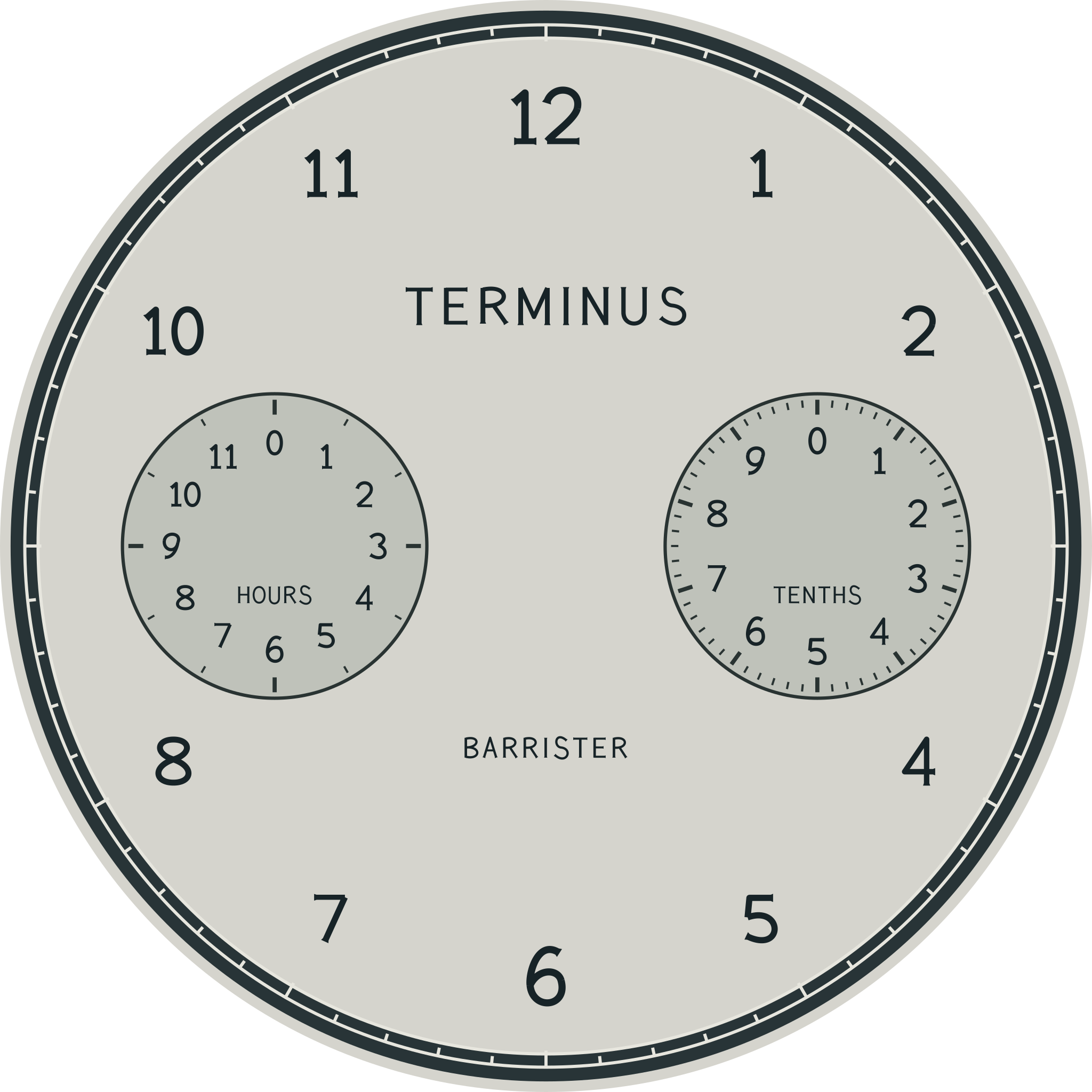
Investor portfolio · 1 November 2026
An independent watch company.
A design system of its own.
TERMINUS is the first customer of the system being built to design its watches.
Development-stage investor discussion.
Watches and the design platform.
Raise amount and valuation remain open.
01 / The proposition
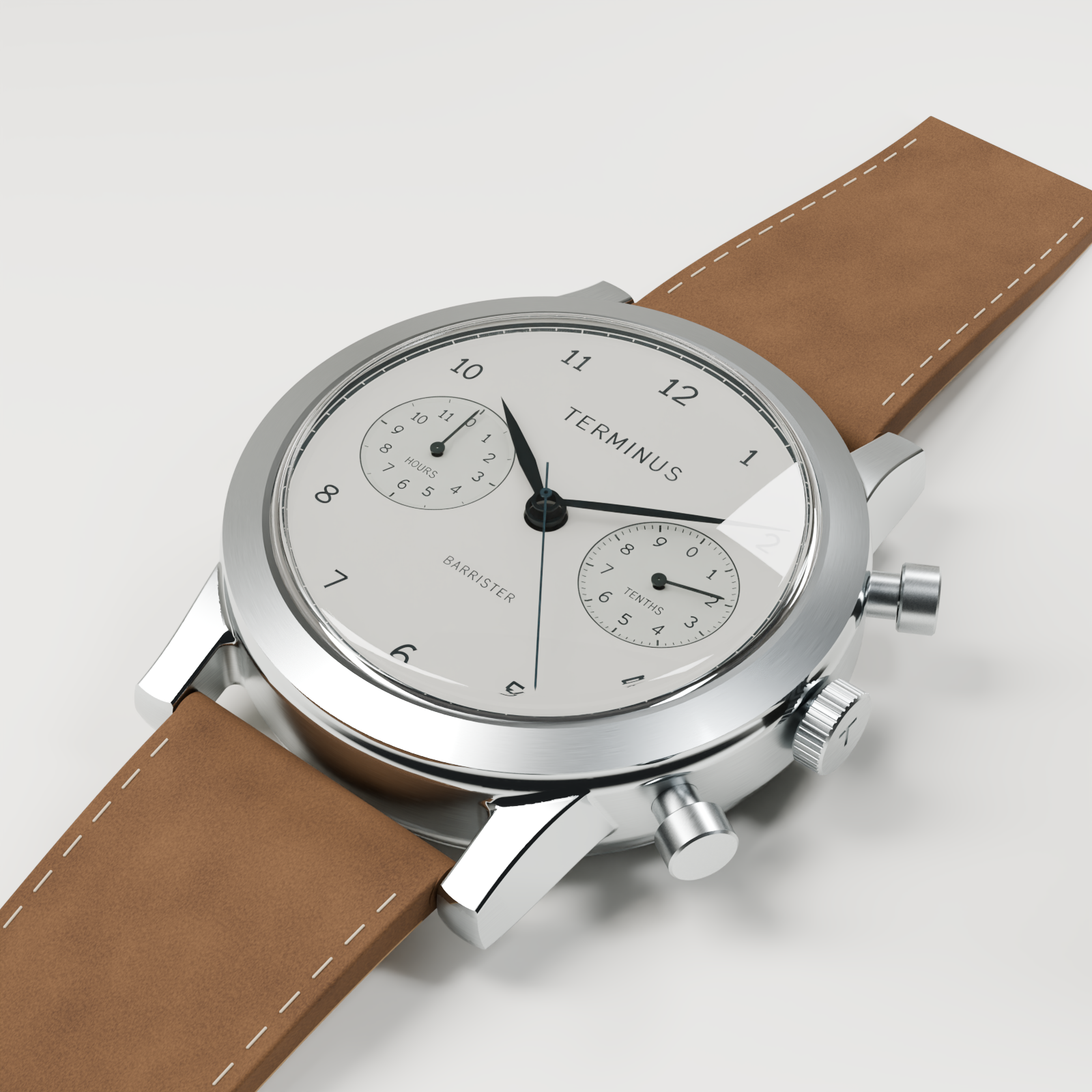
The watch and the tools to design it.
Independent watch designs, developed through an owned system of editable components, dimensional CAD and exact artwork.
The immediate customer is the founder's own watch company. The tool is intended to preserve human decisions as a design moves from composition to geometry, rendering and supplier handoff.
The commercial question is whether this combination can produce a watch people want and a repeatable way to develop the next one. External software sales are a later possibility. Internal usefulness comes first.
The first commercial test is the physical watch: who chooses it, at what price, and with what service expectations. Customer demand has not yet been established.
02 / First application
The Barrister.
Hours left.
Tenths right.
The proposed chronograph follows elapsed progress while running, rounds the accumulated total up to a six-minute unit when stopped, and restores retained raw time on resume.
One boundary, two readings
59:01 elapsed1.0 h stopped
Resume restores 0 hours on the left and the raw 59:01 position on the right. Rounding does not overwrite raw time.
The product must compete as a watch: proportion, finish, comfort and a coherent dial have to justify wearing it. The complication adds a specific use, rather than replacing that standard.
The behavior runs in software. A physical rounding module, reversible carry and reset have not been built. No production movement is selected.
Explore the timing behavior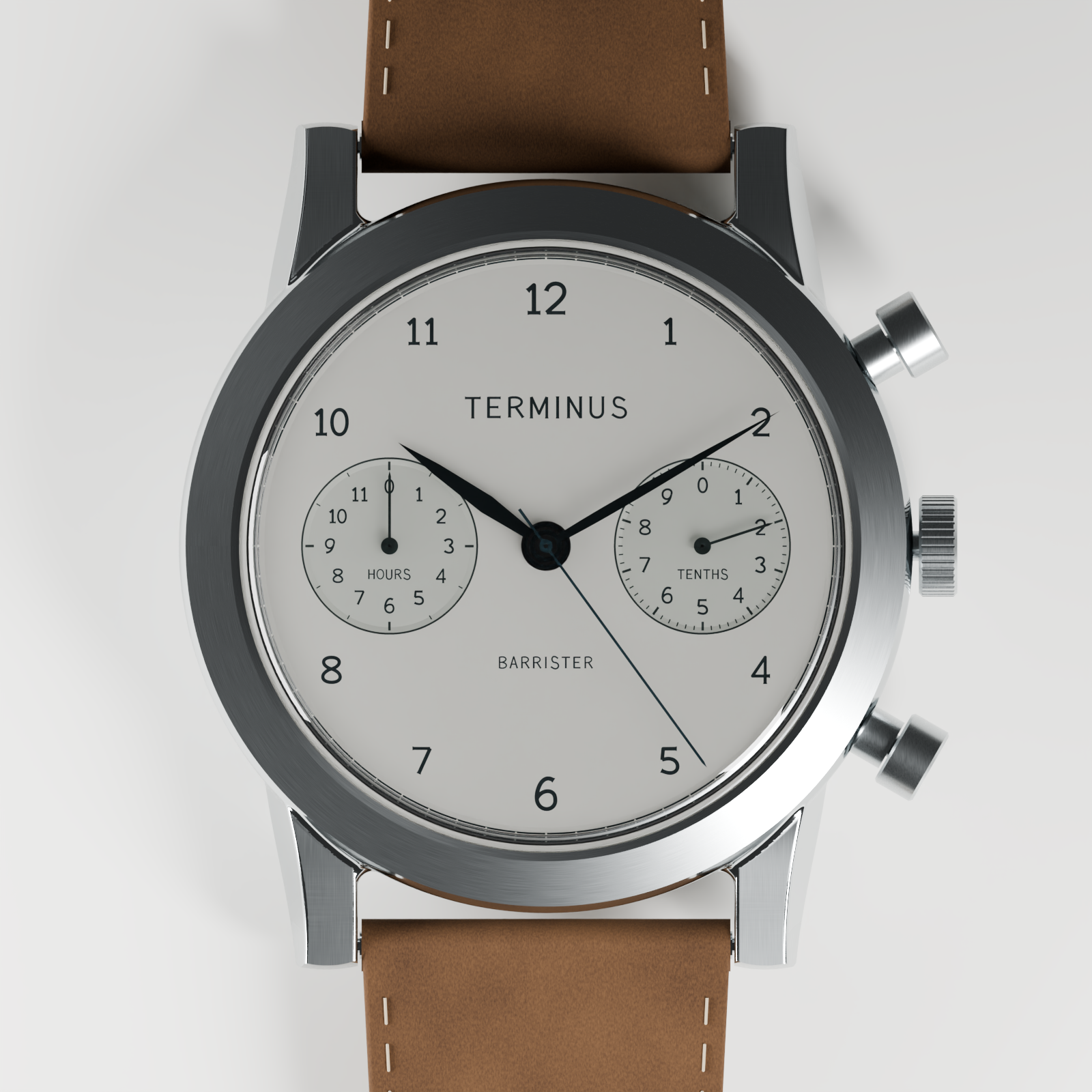
03 / The design system
Revise the watch.
Keep its design.
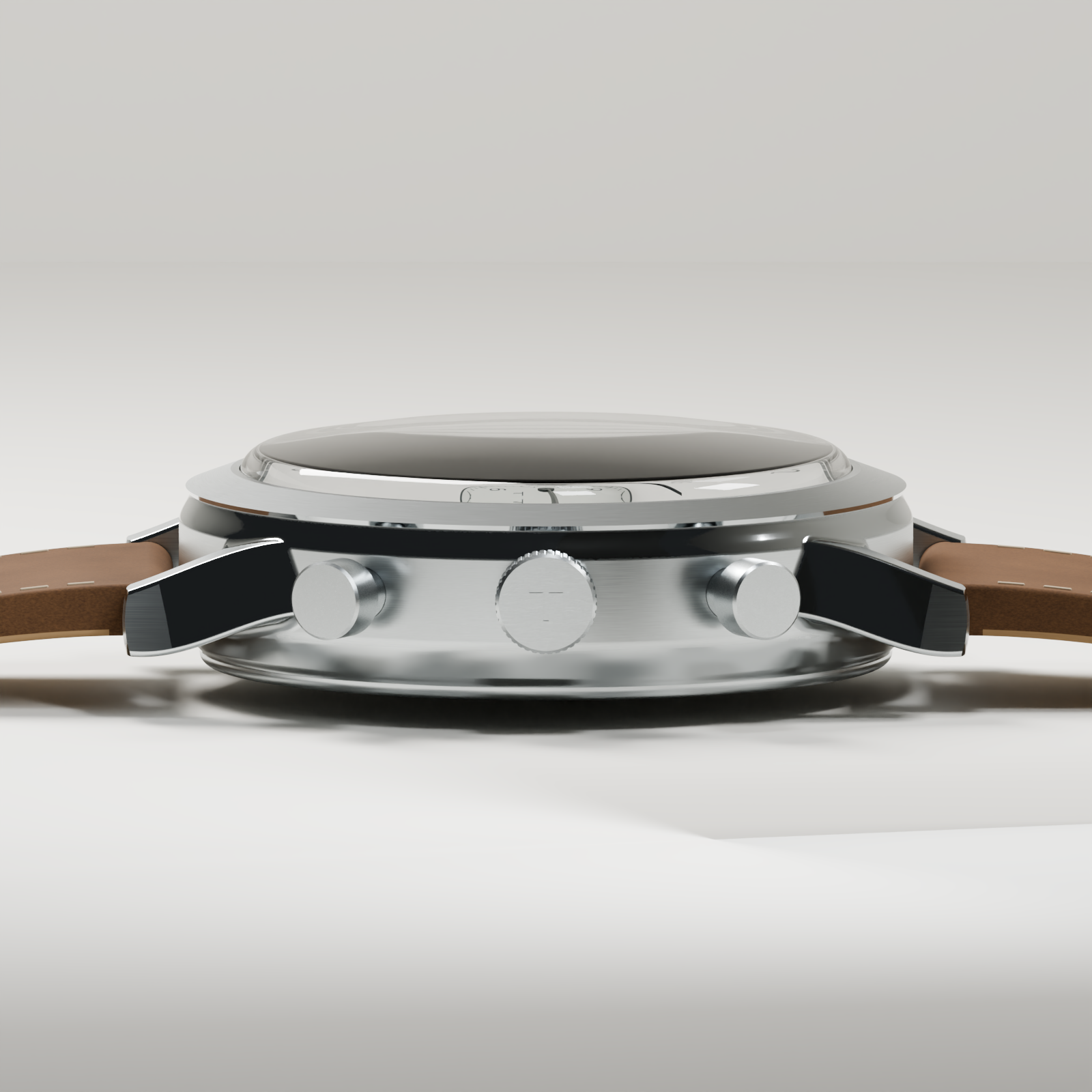
The current studio connects two independently owned watches to reusable hand blades, distinct movement fittings, explicit component adoption, Undo and saved return. Both constructions have actual STEP assemblies and renders tied to captured geometry and artwork.
Eight generic starting types and a 30–46 mm size domain now guide supported controls. A reviewed resize preserves the dial and source interfaces while proposing exterior attachment changes. Fit constraints remain explicit. Browser edits save on that device and origin; new CAD and renders require the local service.
A repeatable authoring path
Choose.
Compose.
Construct.
Watch type → owned components → source fittings → dimensional CAD → captured rendering.
- Keep each watch independently editable.
- Review a component change before adopting it.
- Retain the accepted design through Save and Undo.
Fusion already integrates CAD and manufacturing tools; Rhino already provides rendering controls. The hypothesis to test is the value of a watch-specific workflow. Faster work, lower costs and a unique commercial advantage are not established.
04 / Making the watches
Original components.
Purchased movements.
The intended first batches use purchased movements with original cases, dials and hands. Who assembles them is not decided.
Supplier quotes, accepted first articles, bench capacity, inspection, rework and service arrangements remain open. The founder's Georgia Tech background informs a separate precision-manufacturing interest; it establishes no university affiliation or facility access.
Field, diver and day-date watches are possible future applications. They are not a committed launch collection.
05 / First-batch arithmetic
What the assumptions cost.
Illustrative stress cases for 50 planned accepted watches. Unquoted inputs, not a forecast or funding ask.
| Scenario | Batch cash before sale | Active founder hours | Full-batch recovery price per watch |
|---|---|---|---|
| Lower-cost | $28,974 | 99 | $669 |
| Base assumption | $66,054 | 170 | $1,566 |
| Higher-cost | $141,290 | 308 | $3,541 |
Source: a conventional NE88 chronograph cost model, 30 October 2026, recomputed 31 October. This does not price the current SW510 M donor study or the Barrister mechanism. These are coordinated cost stresses, not confidence intervals. Component prices, yield, founder time and import allowances are assumptions.
Recovery price assumes the full batch sells and includes modeled founder labor, selling/service costs and one-time allowances. It excludes recurring overhead, acquisition spend, profit and unmodeled risk. Software and Barrister-module development have no budget in this model.
Cash depends on sell-through. In that illustrative base case, an untested $1,800 price needs 39 retained sales out of 50 to recover modeled batch cash: 38 sales leave −$1,619.68; 39 leave +$75.96. This excludes unpaid founder labor and the development and overhead costs above. It is not company break-even or a proposed price.
Download assumptions and calculations06 / The next investment
The next development stages.
Raise amount, instrument, timing and allocation are unset. Each stage needs a scoped budget before commitment.
A watch worth making
Refine the case and dial, inspect the same design in CAD and renders, then test a physical wearing model and buyer response.
A mechanism that can fit
Build a physical stop/resume, carry and reset demonstrator. Establish forces and package requirements before funding integration.
A batch that can be delivered
Obtain supplier quotations and first articles. Measure assembly, inspection and rework; establish spares and service.
A repeatable design workflow
Complete another owned design and compare the work with an existing-tool workflow. Test external designer demand separately.
07 / Questions to resolve
What has to be true?
Will someone choose this watch?
Interest in six-minute timing does not establish demand for the physical design or willingness to pay.
Does the tool help the next watch?
Measure completed design work. More features alone do not establish value.
Can the founder deliver and service it?
Assembly is one responsibility alongside design, procurement, quality and customer support.
What if the tool stays internal?
The watch business must stand on its own economics. An internal tool does not imply another revenue stream.
Supporting materials
Files and demonstrations.
Digital construction and software behavior are available to review. Physical fit, accepted design, supplier economics and customer demand remain to be established.